Steps in standard AutoCAD
- Associate your standards file (.dws) with the drawing using the STANDARDS command.
- Run the CHECKSTANDARDS command and review the layers that are not in the standard.
- Open the Layer Properties Manager (LAYER) and compare the drawing's layer list with the layers in the standard.
- Map each layer that is not in the standard to a standard layer and convert it with the LAYTRANS command. You choose the target layer yourself.
Ask AI to do it in one step
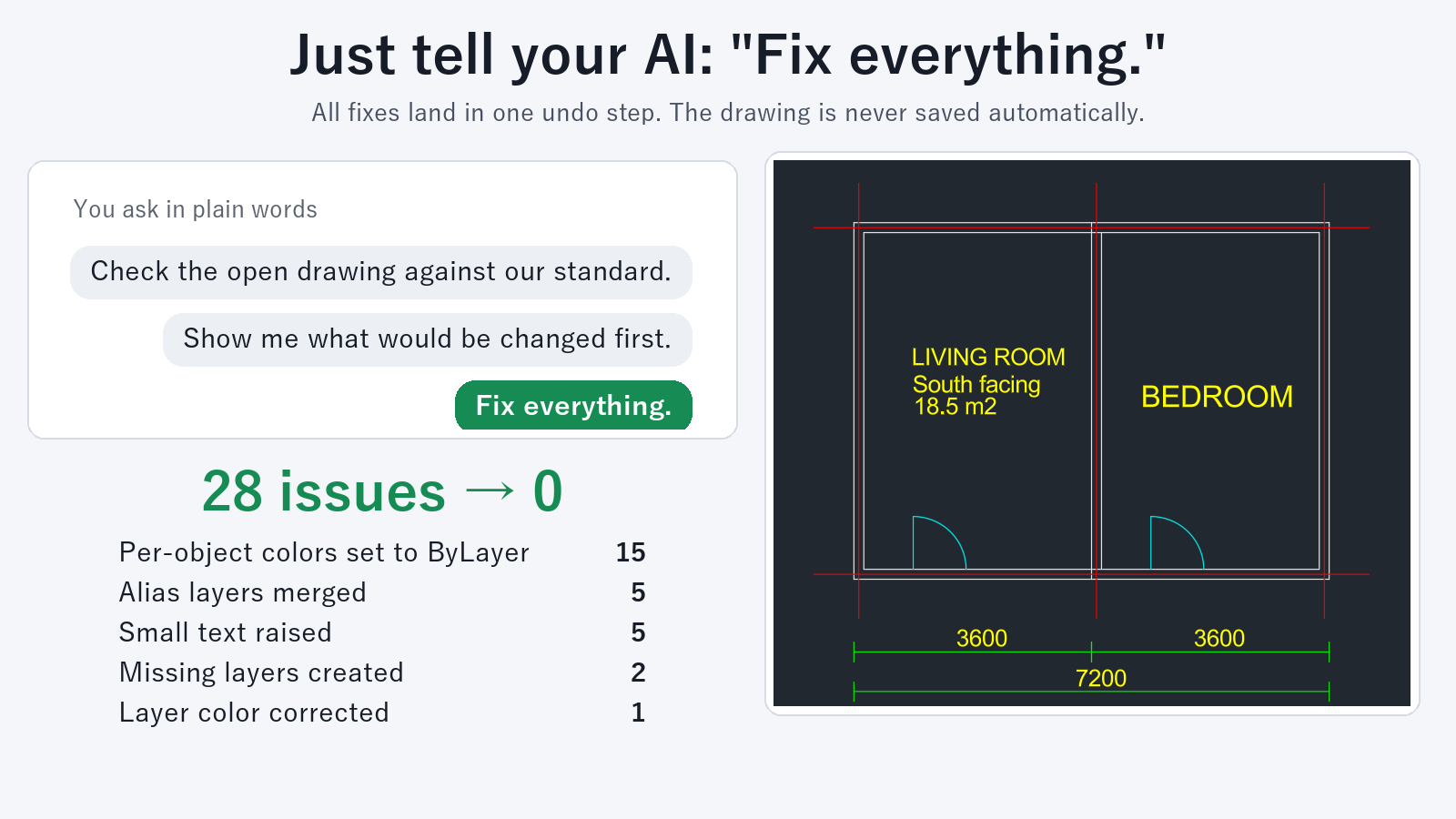
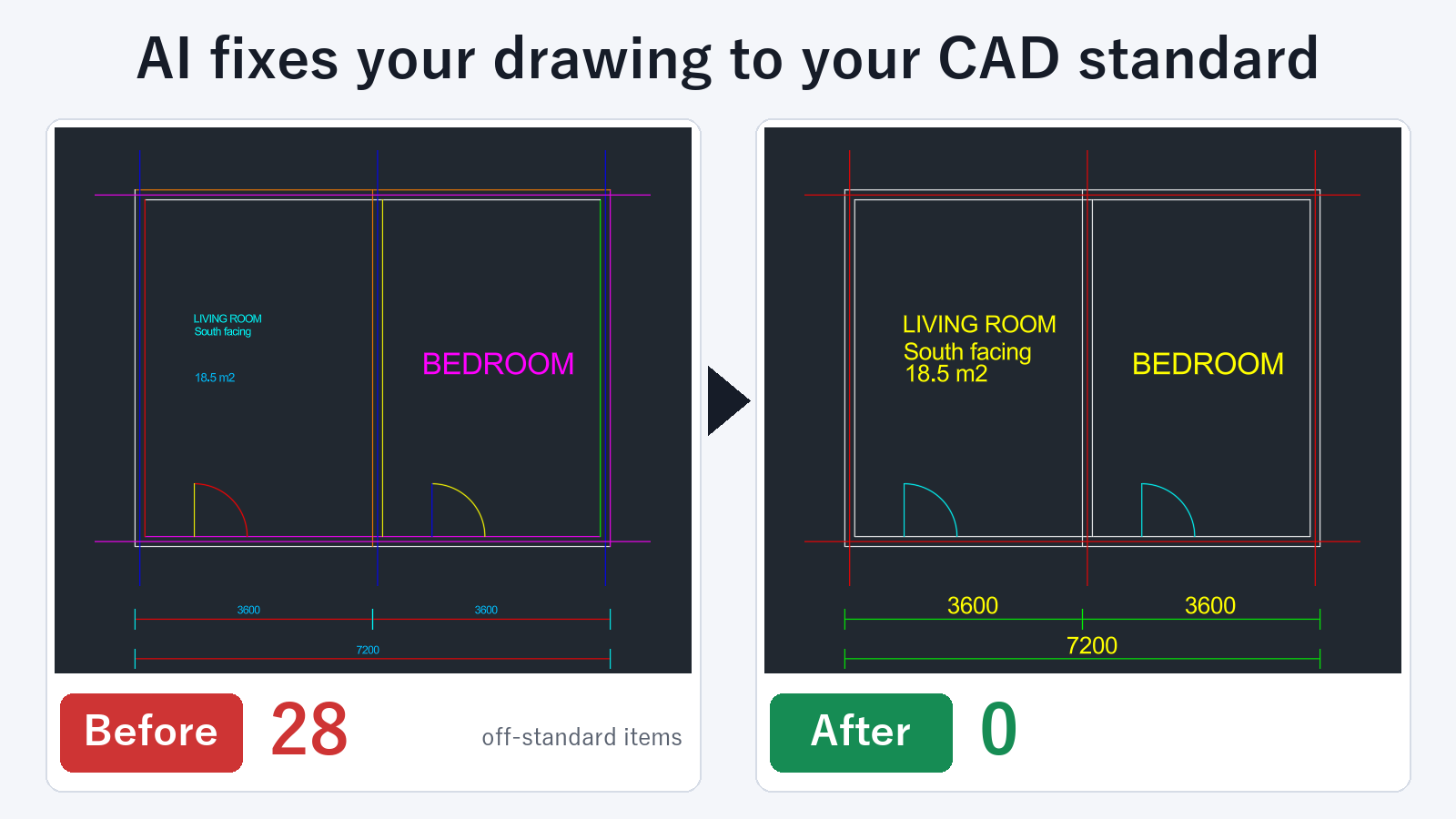
Ask an AI client that has "Drawing Rule Fixer for AutoCAD" installed (for example, Claude Desktop). You can use prompts like these:
- "List the layers that are not in our standard"
- "List the layers in this drawing"
The AI returns the items that do not match the standard as a list, with a count for each type. It also reports objects on layer 0 and layers that are not in the standard. Listing layers and checking are free, with no limit on the number of uses.
Layers that are not in the standard and objects on layer 0 need a person to decide where they go. To avoid moving anything by mistake, the AI only reports them in a list.
Layers that use a different name (for example "WALLCENTER" and "WALL-C") can be merged into the correct company layer. To do this, write the mapping in the rules file. Merging is a subscription feature, and it also moves objects inside blocks. Fixes to a drawing that is open in AutoCAD can be reversed with one UNDO.
Which method to use
To only find layers that are not in the standard, the AI list is ready to use right away. When you need to choose the target layers and convert them, mapping them yourself with LAYTRANS is the more reliable way.
FAQ
Does the AI delete layers that are not in the standard automatically?
No. It only reports them in a list. It does not move or change them.
What happens if a layer is locked?
The AI reports the name of the layer. It does not change objects on a locked layer. Unlock the layer and ask again, and those objects are included.
Can I check all the drawings in a folder at once?
Yes. You can check the DXF files in a folder together, and you get a table for each drawing showing what was found and how many. This is a subscription feature.